

Tinder Photos: How to Be Genuine While Staying Safe
Your Tinder photos say a lot about you. Learn how to choose authentic images that attract the right matches while protecting your privacy online.
Your tinder photos are often the first impression you make in the digital dating world. For Australian singles swiping through profiles in Melbourne, Sydney, or Brisbane, those few images determine whether someone swipes right or keeps scrolling. But here's what many people overlook: while you're focused on looking your best, you should also be thinking about your safety. The photos you choose don't just attract potential matches-they also reveal information about you that could be used in ways you haven't considered.
Why Your Tinder Photos Matter More Than You Think
Most people understand that tinder photos influence match rates. What they don't always consider is how these images can be reverse-searched, analyzed, and used to build a detailed picture of your life outside the app.
Research shows that individuals often struggle to choose their most flattering photos, which is why many people ask friends for help. But beyond looking attractive, your photos create a digital trail. Every image you upload potentially contains metadata, reveals locations, and connects to other social media profiles.
The Balance Between Authenticity and Privacy
Here's the tension Australian singles face in 2026: you want to appear genuine and approachable, but you also need to protect yourself from potential misuse of your images. This isn't about being paranoid-it's about being smart.
Key considerations when selecting images:
- Recent photos only: Using pictures from 2022 or earlier creates false expectations and erodes trust
- Clear face shots: Essential for matches to recognize you, but consider what else appears in the background
- Activity photos: Show your interests without revealing your exact gym, café, or running route
- Group photos: Demonstrate you have friends, but protect their privacy by getting consent first
- Location awareness: That photo at your local beach might be gorgeous, but does it pinpoint where you live?
The goal isn't to hide who you are. It's to share enough to attract compatible matches while keeping certain details private until you've established trust.
What Your Photos Reveal Beyond Your Appearance
Every tinder photo tells a story, sometimes one you didn't intend to share. Let's break down what information can be gleaned from seemingly innocent images.
Visual Data Points Others Can Extract
| Photo Element | What It Reveals | Privacy Risk |
|---|---|---|
| Background landmarks | Your neighborhood or regular locations | Medium to High |
| Work uniforms or badges | Your employer and potentially your role | High |
| Car number plates | Vehicle registration details | High |
| Home interiors | Your living situation and potentially address | Medium |
| Pet photos | Identifying details for social engineering | Low to Medium |
| Gym or sports club logos | Where you regularly spend time | Medium |
Beyond these obvious elements, research into online dating profile construction reveals that people carefully curate images to present specific personality traits. You're not just showing what you look like-you're broadcasting values, lifestyle, and social status.
The Metadata Problem
Modern smartphones embed location data, timestamps, and device information into photos. While Tinder strips some of this metadata, not everyone uploads directly from their phone. If you're sharing photos that originated elsewhere online, they might carry more information than you realize.
Steps to minimize metadata exposure:
- Use photos taken specifically for your dating profile
- Check your phone's camera settings to disable location tagging
- Avoid uploading screenshots of photos, as these can contain additional data layers
- Consider using simple photo editing tools that automatically strip metadata when saving
Choosing Photos That Attract Genuine Connections
Now that we've covered the safety considerations, let's talk about actually getting matches. After all, the point of tinder photos is to connect with people you're genuinely interested in meeting.
The First Photo Sets the Tone
Your primary image does the heaviest lifting. Professional photography tips for dating apps emphasize that this photo should be a clear, recent solo shot with good lighting and a genuine smile.
What works in Australian dating culture:
- Natural outdoor lighting (we've got plenty of sunshine to work with)
- Casual but intentional styling (overly formal photos can feel disconnected)
- Eye contact with the camera (builds immediate connection)
- A genuine expression (forced smiles are obvious)
What doesn't work? Bathroom selfies with messy backgrounds, heavily filtered images that don't look like you, or photos where you're barely visible among a group of mates.
The Supporting Cast of Images
Your remaining photos should tell a cohesive story about who you are and what you value. Think of them as chapters in a book, each adding dimension to your personality.
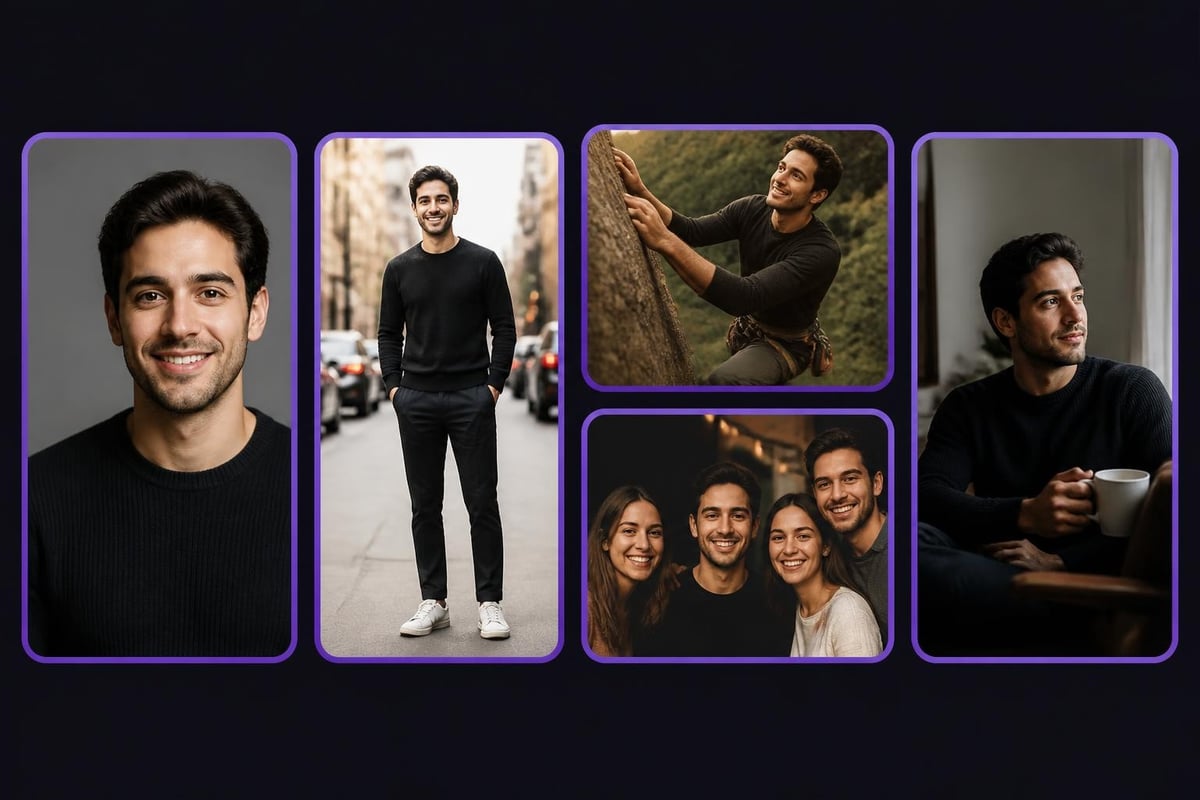
Here's an effective structure:
- Photo One: Clear headshot with great lighting
- Photo Two: Full-body shot showing your build honestly
- Photo Three: Activity or hobby photo (surfing, hiking, cooking)
- Photo Four: Social photo demonstrating you have friends
- Photo Five: Something that shows personality (travel, pets, passion project)
- Photo Six: Optional wildcard (funny moment, unique skill, interesting setting)
According to data-backed profile photo advice, this variety helps matches understand you as a complete person rather than just a face.
Red Flags to Avoid in Your Photos
Just as you're evaluating potential matches based on their photos, they're doing the same to you. Certain image choices send warning signals that might cost you connections with quality people.
Images That Undermine Trust
Photos to leave out:
- Shots with visible exes (even if cropped, it's obvious)
- Images where you're clearly intoxicated
- Bathroom mirror selfies as your primary photo
- Heavily filtered photos that dramatically alter your appearance
- Outdated images from several years ago
- Photos borrowed from professional modeling shoots (unless you're actually a model)
Tinder actually banned tiger selfies due to animal welfare concerns, highlighting how some photo choices can reveal questionable judgment. While you might not be posing with exotic animals, the principle remains: your tinder photos reflect your values and decision-making.
The Over-Editing Problem
Australian singles in 2026 are increasingly savvy about photo manipulation. Heavy filters, dramatic smoothing, and unrealistic adjustments create suspicion rather than attraction. When you eventually meet in person, you want your date to recognize you immediately.
There's a difference between choosing flattering lighting and fundamentally altering your appearance. One shows you understand presentation; the other suggests you're not comfortable with who you actually are.
How Others Might Use Your Photos
This is where dating safety becomes crucial. Before you meet someone from Tinder, it's worth understanding how your photos might be used beyond simply viewing your profile. Running a web search check on potential matches can give you peace of mind, but you should also be aware of how your own images might be searched.
Reverse Image Searching
Anyone can upload your tinder photos to Google Images, TinEye, or other reverse image search tools. This might reveal:
- Other social media profiles you haven't linked
- Places where your photos appear online
- Whether images are stolen from someone else (yes, this happens)
- Locations or events visible in the background
This isn't necessarily malicious-many people do this as a basic safety check before meeting someone. But it means you should be intentional about what your photos might connect back to.