
Tinder or Bumble: Which Dating App is Safer for Aussies?
Comparing Tinder or Bumble for Australian singles? Learn which app offers better safety features, user control, and peace of mind in 2026.
When you're ready to dive into online dating, the choice between apps can feel overwhelming. Two names dominate the Australian market: Tinder and Bumble. Both have millions of users worldwide, but they take very different approaches to how you meet people and, importantly, how safe you feel while doing it. For Aussie singles who value their safety and peace of mind, understanding the differences between tinder oder bumble isn't just about features, it's about choosing the platform that aligns with your comfort level and dating goals.
How Tinder and Bumble Actually Work
The fundamental difference between these platforms shapes every interaction you'll have.
Tinder pioneered the swipe-right culture back in 2012. You scroll through profiles, swipe right if you're interested, left if you're not. When two people swipe right on each other, it's a match. From there, either person can send the first message. This open approach means you could receive messages from anyone you've matched with, at any time.
Bumble launched in 2014 with a different philosophy. The swiping mechanics are identical, but here's the twist: in matches between men and women, only women can send the first message, and they have 24 hours to do it. If no message arrives, the match disappears. For same-sex matches, either person can initiate.
This seemingly small difference creates two distinct experiences:
- Tinder: Fast-paced, high volume, less filtering
- Bumble: More deliberate, time-pressured, built-in screening
User Numbers and Demographics
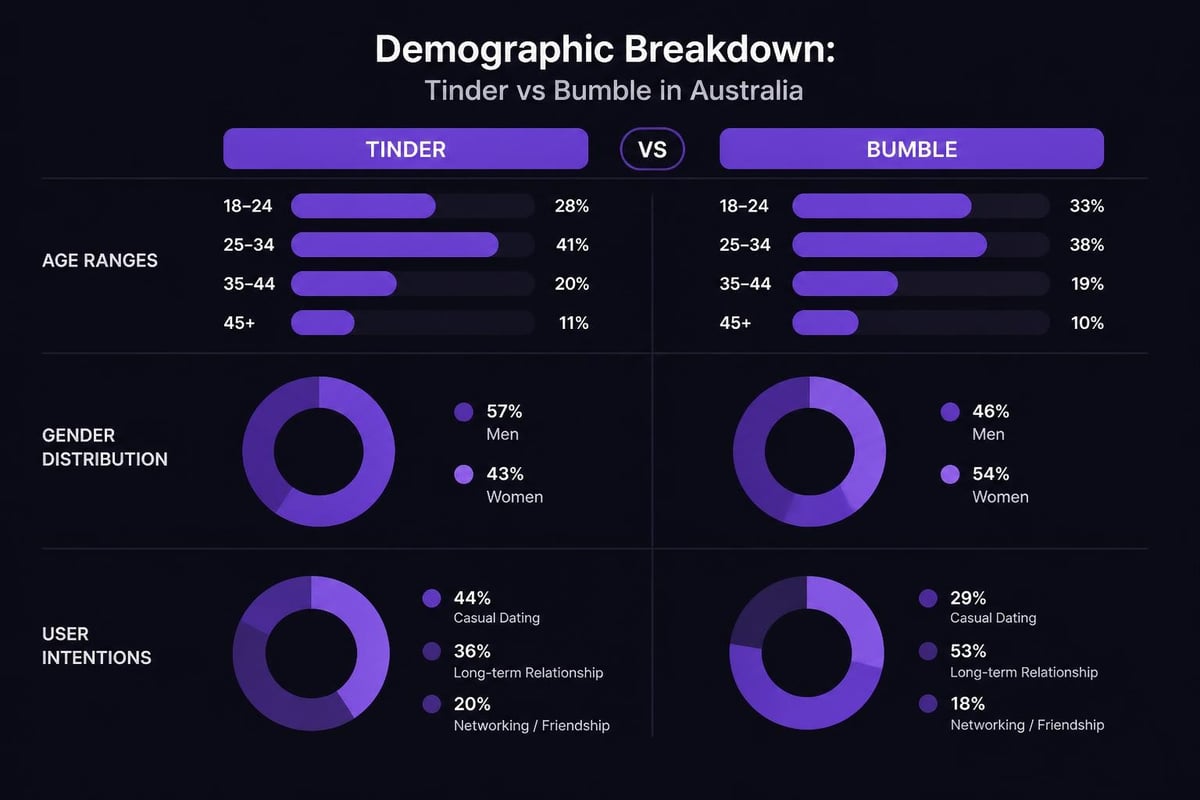
Both apps have substantial Australian user bases. Research shows that online dating has become mainstream, with roughly 30% of Australian adults having used a dating app at some point.
Tinder claims over 75 million users globally and remains the most downloaded dating app in Australia year after year. Bumble, while smaller with around 42 million users worldwide, has carved out a loyal following among women who appreciate having control over initial contact.
| Feature | Tinder | Bumble |
|---|---|---|
| Global users | ~75 million | ~42 million |
| Primary age range | 18-34 | 25-40 |
| Gender split | 62% male, 38% female | 46% male, 54% female |
| Who messages first | Anyone | Women (heterosexual matches) |
Safety Features: What Each App Offers
When weighing up tinder oder bumble, safety tools should be at the top of your checklist.
Tinder's Safety Toolkit
Tinder has added several safety features over the years, particularly after facing criticism about user safety:
- Photo Verification: You can verify your profile by taking real-time selfies that Tinder compares to your photos. Verified profiles get a blue checkmark.
- Noonlight Integration: Share your date details, location, and timeline with emergency services who can respond if needed.
- Traveller Alert: LGBTQ+ users receive warnings when travelling to countries where their safety might be at risk.
- Does This Bother You?: AI detects potentially offensive messages and asks if you're okay before they reach you.
But here's what Tinder doesn't do: There's no mandatory verification, limited background screening, and no systematic way to check if someone is who they claim to be.
Bumble's Safety Approach
Bumble markets itself as the safer choice, with features including:
- Photo Verification: Similar to Tinder, users submit real-time selfies. Bumble's process is mandatory for many features.
- Private Detector: AI blurs lewd images before you see them, giving you control over whether to view or report.
- Block Contacts: Sync your phone contacts to automatically block people you know.
- Video and Voice Chat: Test compatibility in-app before sharing your number or meeting.
The women-message-first rule is Bumble's most distinctive safety feature. It reduces unsolicited messages and gives women control over who enters their inbox. Research on dating apps shows that this structural difference affects user experience and perceived safety significantly.
The Gap Both Apps Leave
Neither platform conducts comprehensive background checks. Neither systematically verifies employment, relationship status, or criminal history. A verified photo simply confirms the person looks like their pictures, not that they're safe to meet.
This is where many Australian singles turn to additional tools. Before a first date, running a web search check can provide a clearer safety rating by scanning public records, social media presence, and other online footprints that dating apps don't access.
Privacy and Data: Who Sees What?
Your personal information matters, especially when you're putting yourself out there.
What Tinder Knows About You
Tinder collects extensive data: your location, messages, swipe patterns, and even the time you spend looking at each profile. This information builds a profile that determines who sees you and who you see. Your data is shared with parent company Match Group and used for advertising.
Privacy concerns:
- Your profile is visible to anyone in your area using the app
- You can't fully hide your profile without deleting your account
- Tinder Gold users can see who's already liked them, creating an imbalanced information dynamic
What Bumble Knows About You
Bumble collects similar data but offers slightly more control. You can use Bumble's "Incognito Mode" (a paid feature) to hide your profile from everyone except people you've swiped right on.
Privacy advantages:
- More granular control over who sees you
- Bumble BFF and Bumble Bizz keep dating separate from friendships and networking
- Stricter policies around data sharing with third parties
| Privacy Feature | Tinder | Bumble |
|---|---|---|
| Hide profile completely | Delete account only | Incognito Mode (paid) |
| Control who sees you | Limited | Better controls |
| See who liked you | Tinder Gold (paid) | Bumble Premium (paid) |
| In-app video calling | Limited | Yes |
When considering tinder oder bumble from a privacy standpoint, Bumble edges ahead, but both apps collect substantial personal data.
The Catfishing and Scam Risk
Let's talk about the elephant in the room: fake profiles and scammers.
Catfishing, where someone creates a fake identity to deceive others, happens on both platforms. Romance scams cost Australians over $40 million in 2025 alone, according to consumer protection agencies.
Common Warning Signs
Whether you're using Tinder or Bumble, watch for these red flags:
- Profile has only one or two photos: Real people usually have multiple current photos.
- Moves conversation off-app immediately: Scammers want to avoid platform monitoring.
- Can't or won't video chat: Always has an excuse.
- Shares elaborate sob stories quickly: Setting up a request for money.
- Professional-looking photos only: Could be stolen from modeling sites.
Which Platform Has More Fakes?
Tinder's larger user base and lower barriers to entry mean it has more fake profiles in absolute numbers. Bumble's verification requirements and women-first messaging reduce but don't eliminate the problem.
Academic research on romance fraud shows that scammers adapt to any platform's rules. The question when choosing tinder oder bumble isn't which has zero risk (neither does), but which gives you better tools to protect yourself.
Real-World Dating Experience: What Users Say
Beyond features and policies, how do these apps actually feel to use?
The Tinder Experience
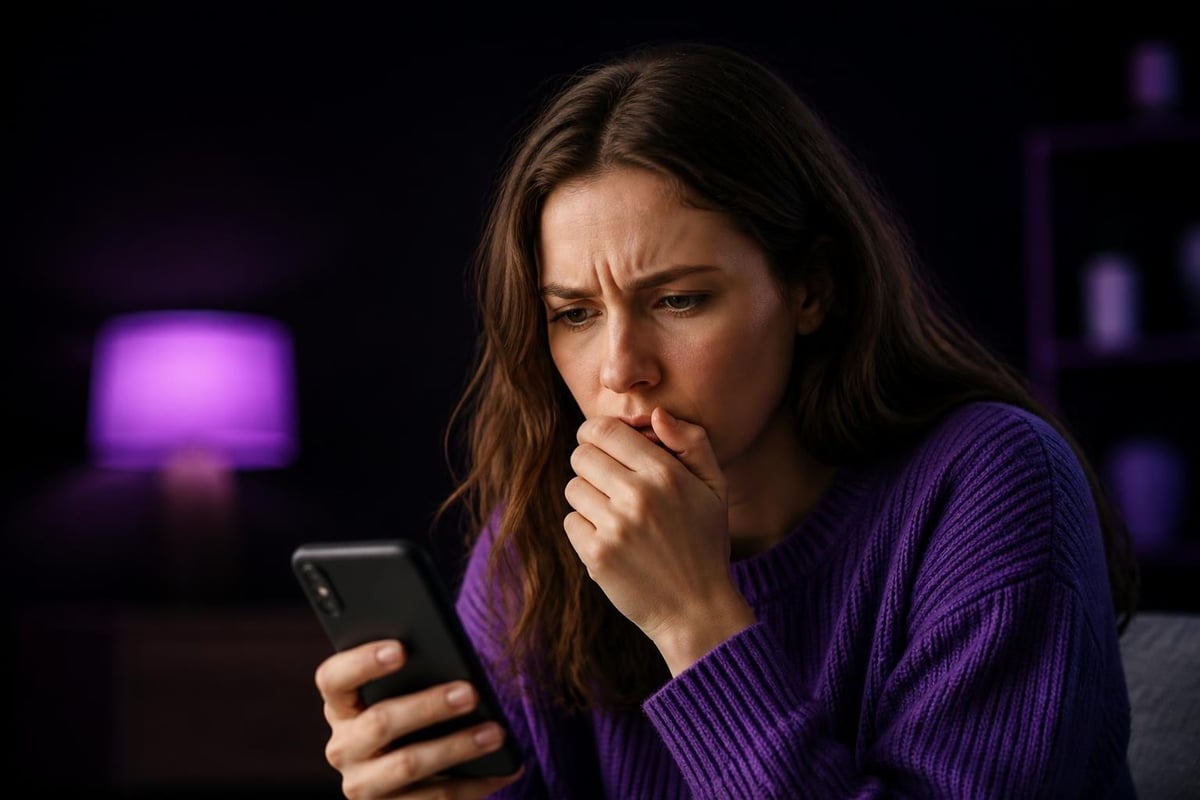
Tinder users describe a fast-paced, sometimes overwhelming environment. You might match with dozens of people in a day, but meaningful conversations can be rare. The app's design encourages quick jud