

Tinder Match Record: What It Reveals About Your Dating Safety
Your Tinder match record tells a story beyond numbers. Learn what patterns reveal about safety, red flags, and smarter dating decisions in 2026.
Your tinder match record isn't just a number to brag about or hide. It's a digital footprint that tells a story about how you're dating, who you're matching with, and whether you're prioritizing safety alongside excitement. For Australian singles navigating the dating scene in 2026, understanding what your match history reveals can help you make smarter, safer choices before that first coffee date.
Why Your Match History Matters More Than You Think
Most people check their tinder match record out of curiosity or ego. How many matches did I get this month? Am I doing better than my mates? But there's a deeper layer worth examining.
Your match patterns reveal behavioral tendencies. If you're matching with dozens of people but never meeting anyone, that's one story. If you match rarely but meet frequently, that's another. Neither is wrong, but both tell you something about your approach to online dating.
Key patterns to watch:
- Match frequency compared to conversation quality
- Time between matching and meeting in person
- Geographic patterns in your matches
- Profile types you consistently swipe right on
- Matches that unmatch quickly versus those that progress
Research shows that user behavior on Tinder varies significantly between different demographics, with match rates influenced by everything from photo quality to bio content. Understanding your own patterns helps you refine your approach.
The Safety Angle Nobody Talks About
Here's what most articles about your tinder match record won't mention: consistency matters for safety. If someone has an unusually high match rate coupled with very short conversation windows, that's worth noticing. Not necessarily a red flag on its own, but part of a bigger picture.
Similarly, your own record can help you spot when you're rushing. If you notice you're matching and meeting within 24 hours repeatedly, ask yourself whether you're taking enough time to vet potential dates properly.

What the Numbers Actually Tell You
Let's get practical. According to average match statistics, most Australian men receive between 0-10 matches per month, while women typically see 50-100. These numbers vary wildly based on location, age, and profile quality.
But raw numbers miss the point entirely.
| Metric | What It Reveals | Safety Consideration |
|---|---|---|
| Total matches | General appeal, photo quality | Very high numbers may indicate bot-like behavior |
| Match-to-conversation ratio | Genuine interest level | Low ratio suggests poor vetting |
| Conversation length before meeting | Patience and compatibility | Very short may indicate rushing |
| Unmatches received | Red flags you're displaying | High rate warrants self-reflection |
| Geographic spread | Intentionality vs casual swiping | Wide spread may indicate less serious intent |
Your tinder match record becomes meaningful when you look at ratios and patterns, not absolute numbers. Someone with 20 matches and 15 genuine conversations is likely having a better (and safer) experience than someone with 200 matches and 10 brief exchanges.
Gender Differences in Match Records
The data doesn't lie: match experiences differ dramatically by gender. Match rate statistics across dating platforms show women typically match with 30-40% of right swipes, while men match with roughly 2-5%.
What this means for safety:
- Women need better filtering strategies due to volume
- Men may take more risks due to scarcity mindset
- Both genders benefit from quality over quantity thinking
- Higher match rates don't correlate with safer dating
This imbalance creates different safety challenges. Women often face decision fatigue and may miss warning signs in the noise. Men sometimes overlook red flags because they're grateful for any match at all.
Reading Between the Lines of Your Match History
Tools like SwipeStats let you analyze your personal Tinder data in detail, revealing patterns you'd never notice manually. You might discover you swipe right most frequently on Friday nights (possibly after a few drinks and with less judgment). Or that you match most often with profiles that have certain keywords.
But here's what these analytics can't tell you: whether someone is actually safe to meet.
Your tinder match record shows attraction and algorithm compatibility. It doesn't show:
- Whether someone has a history of concerning behavior
- If their photos match their real identity
- Whether they're genuinely single
- If they've been reported by other users
- What their digital footprint reveals
This is where smart Australian singles go beyond the match. Before meeting someone from a dating app, many now run a web search check to verify basic information and look for any public safety concerns. It's not about being paranoid; it's about being proportionately careful with someone you've only known through a screen.
When Your Match Behavior Signals Problems
Sometimes your own tinder match record can reveal habits worth changing:
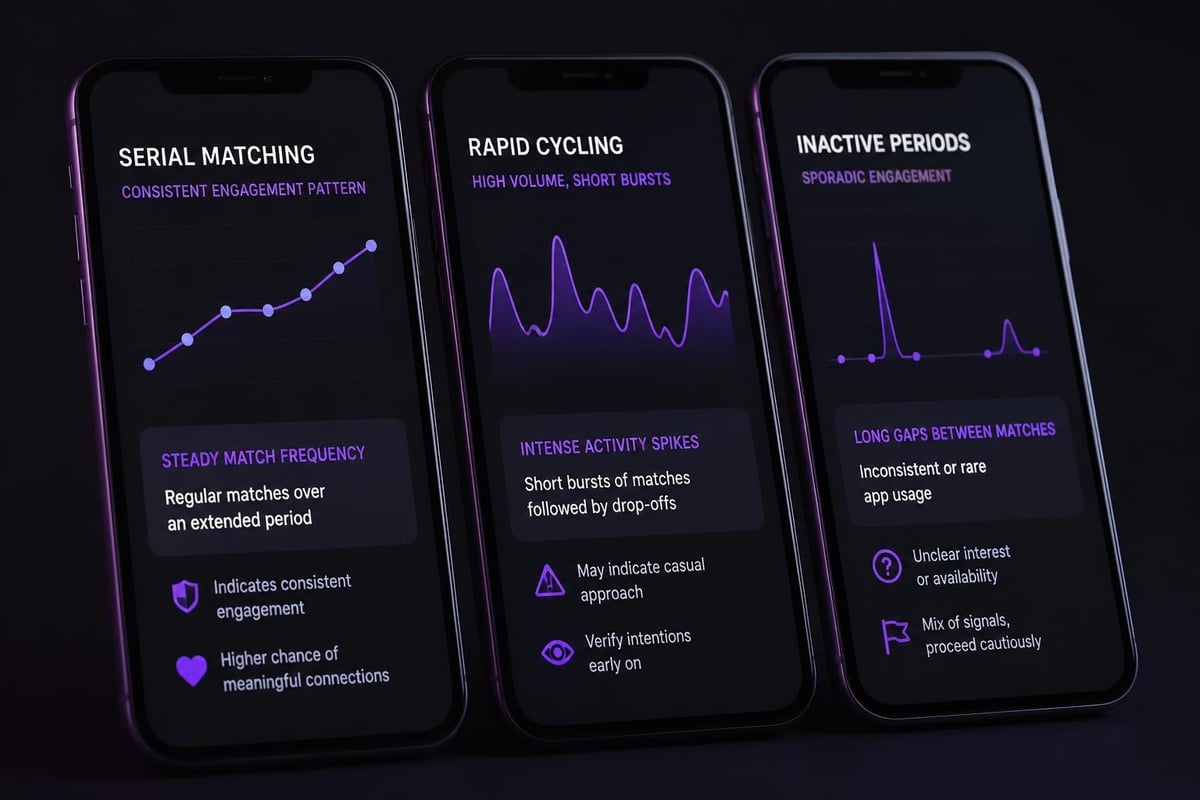
- Serial matching without meeting: Suggests fear of commitment or unrealistic expectations
- Rapid match-and-meet cycles: May indicate insufficient safety vetting
- Frequent unmatching from your side: Could mean your initial criteria are off
- Long gaps with no activity: Might suggest burnout or frustration
None of these patterns make you a bad person. They're just information you can use to date more intentionally.
The Algorithm Behind Your Match Record
Understanding how Tinder's matching system works helps you interpret your tinder match record more accurately. The platform doesn't just show your profile to everyone who might swipe right.
Tinder's algorithm considers:
- Your activity level and swiping patterns
- How recently you've been active
- Your "desirability score" based on who swipes right on you
- Geographic proximity
- Age and gender preferences
- Profile completeness
Research into Bayesian estimation for bipartite matchings shows the mathematical complexity behind modern matching algorithms. Essentially, Tinder is constantly calculating who should see your profile and when.
This means your match numbers aren't purely about your attractiveness. They reflect algorithm decisions, timing, and a dozen other factors you don't control.
Why Some Matches Disappear From Your Record
Ever notice matches vanishing from your tinder match record? Several explanations exist:
| Reason | Frequency | What It Means |
|---|---|---|
| They unmatched you | Very common | Lost interest or found someone else |
| They deleted their account | Common | Left Tinder entirely |
| Account was banned | Less common | Violated terms of service |
| Technical glitch | Rare | Usually resolves itself |
| They blocked you | Uncommon | Serious red flag if frequent |
If you're frequently losing matches, it's worth examining your early conversation style. Australian dating culture values authenticity and humor, but there's a line between cheeky and inappropriate.
Protecting Yourself Beyond the Match
Your tinder match record is just the starting point. What happens after matching determines whether you have a safe, enjoyable dating experience or a concerning one.
Essential safety steps after matching:
- Have substantial conversations before meeting
- Video chat to verify identity
- Google their name and check social media
- Tell a friend your plans
- Meet in public places during daylight
The safety tips that Australian dating experts recommend haven't changed dramatically, but the tools available have improved significantly. In 2026, there's no excuse for meeting a complete stranger without doing basic verification first.
M