

How to Look Up Tinder Profiles Safely in Australia
Want to look up Tinder profiles before meeting? Learn safe, ethical methods to verify your match's identity and protect yourself while dating online.
You've matched with someone interesting on Tinder. The conversation's flowing, you've agreed to meet for coffee, but something's niggling at you. Maybe their photos seem too perfect, or their story has a few gaps. You're not paranoid-you're being sensible. The question is: can you actually look up Tinder profiles to verify who you're about to meet? Let's talk about what's possible, what's ethical, and how to protect yourself without crossing anyone's boundaries.
Why Australians Want to Look Up Tinder Profiles
Let's be honest about why this question comes up so often. Dating apps have fundamentally changed how we meet people, but they've also introduced new risks that our parents never had to navigate.
The most common reasons people search include:
- Verifying someone's identity matches their photos and claims
- Checking if the person has a criminal history or concerning background
- Confirming they're actually single and not in a relationship
- Looking for social media profiles to see if their life aligns with what they've said
- Making sure they're a real person and not a catfish or scammer
The numbers tell the story. Australian singles are increasingly cautious about who they meet from dating apps, and for good reason. Research on dating app privacy shows that users are becoming more aware of the risks involved in sharing personal information with strangers online.
But here's the tension: everyone on Tinder chose that platform partly because it offers some level of anonymity. Unlike Facebook Dating, Tinder doesn't require your full name or detailed personal information upfront. That's by design, and it's actually a feature for many users who value their privacy.

The Legal and Ethical Boundaries
Before we dive into methods, let's establish what's actually acceptable. Just because you can do something online doesn't mean you should.
When you look up Tinder profiles or search for information about your match, you need to stay within legal and ethical boundaries:
- Public information only: Anything freely available on Google, social media, or public records is fair game
- No hacking or unauthorised access: Don't try to access private accounts, use password crackers, or employ any deceptive methods
- Respect privacy settings: If someone's social media is private, that's their boundary
- No harassment: Don't contact their friends, family, or workplace based on what you find
- Proportional response: A quick Google search is reasonable; hiring a private investigator before a first date is not
The legal framework around dating app privacy is still evolving, but Australian privacy laws are clear: everyone has a right to reasonable privacy, even when using dating apps.
What Actually Works When You Try to Look Up Tinder Profiles
Let's cut through the nonsense. There are countless websites and services claiming they can help you look up Tinder profiles, but most are scams, ineffective, or downright creepy. Here's what actually works in 2026.
Reverse Image Search
This is your first and most powerful tool. If someone's photos seem suspicious or too professional, a reverse image search can reveal whether they've been stolen from Instagram, stock photo sites, or someone else's social media.
How to do it:
- Save one or two of their Tinder photos to your device
- Upload them to Google Images or TinEye
- Review the results for matches across the web
If their "candid beach photo" appears on 15 different Instagram accounts or was published in a stock photo library, you've got your answer. Legitimate people use their own photos, even if they're not professionally shot.
Social Media Cross-Referencing
Tinder shows limited information, but people often use the same photos across multiple platforms. This isn't stalking-it's sensible verification.
| Platform | What to Look For | Success Rate |
|---|---|---|
| Matching photos, location tags, friend connections | High | |
| Full name, employer, relationship status | Medium | |
| Job verification, professional background | Medium | |
| Twitter/X | Personality alignment, interests | Low-Medium |
Most people under 40 have at least one social media presence. If someone claims to be a 32-year-old marketing manager in Melbourne but has zero online presence anywhere, that's worth questioning.
Google Search With What You Know
Sometimes the simplest method works best. Take the information they've shared-first name, job, suburb, interests-and run a targeted Google search.
Try these combinations:
- "[First name] [profession] [suburb/city]"
- "[First name] [workplace name] Melbourne"
- "[First name] [unique hobby or interest] Australia"
You'd be surprised how often this surfaces a LinkedIn profile, a news article, or a professional website that confirms their story.
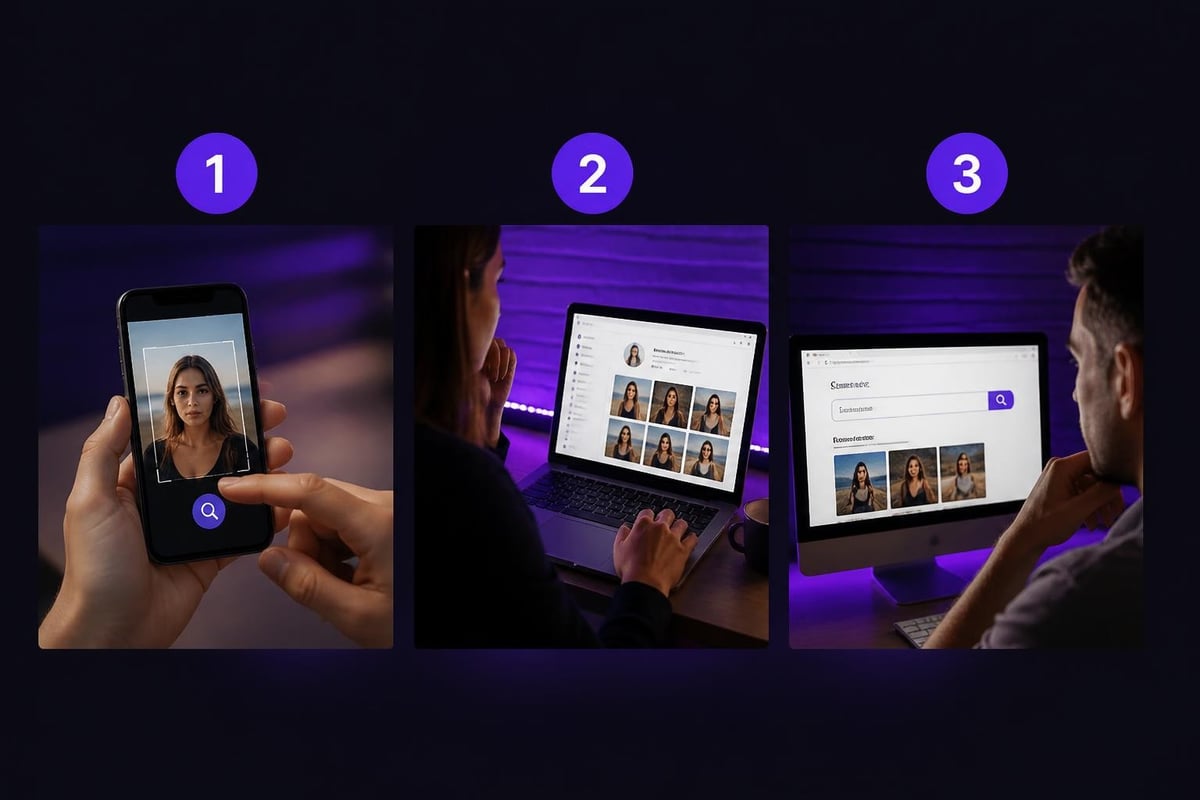
The Services That Claim to Help You Look Up Tinder Profiles
New websites and apps regularly pop up claiming they can help you find or search Tinder profiles. Some promise to show you who's active, others claim they can reveal "secret profiles," and a few even suggest they can search by email or phone number.
Here's the reality check:
Most of these services fall into three categories: scams designed to harvest your personal information, subscription traps that take your money and provide nothing useful, or technically questionable services that violate Tinder's terms of service.
Tinder's platform doesn't offer a searchable directory for good reason. The app's architecture is designed around swiping through potential matches, not searching for specific people. Any service claiming otherwise is either lying or accessing data in ways that raise serious privacy concerns.
What Tinder Actually Offers
Tinder itself has introduced some verification features that can help you feel more confident about matches. Face verification technology has been rolled out in some markets, including California, with plans for wider implementation.
While not available for profile searches, these verification tools at least confirm that:
- The person's photos match their actual face
- They're a real person, not a bot or fake account
- Their primary photo is genuinely them
When you see that blue verification tick, it's a positive sign. Not having one isn't necessarily suspicious-many genuine users simply haven't gone through the process yet.
A Smarter Approach: Web Search Checks for Dating Safety
Rather than trying to look up Tinder profiles through questionable third-party services, there's a more effective approach: comprehensive web search checks that respect privacy while prioritizing safety.
Before meeting someone from Tinder, running a privacy-conscious web search check gives you the information that actually matters. This isn't about invading someone's privacy-it's about making informed decisions before you're sitting across from a stranger in a café.
A proper web search check should include:
- Public records screening (court records, business registrations)
- Social media presence verification
- News article searches
- Photo verification across platforms
- Dating app history where publicly available
- Clear safety ratings based on findings
The difference between trying to look up Tinder profiles manually and using a proper verification service is efficiency and comprehensiveness. You're not just checking one aspect-you're getting a complete picture from publicly available information.
What to Do With What You Find
Finding information is one thing; knowing how to respond is another. Not everything you discover is a red flag, and not every mystery means danger.
Green flags:
- Social media profiles that match their Tinder description
- Pr