How to Check Dating Profiles Before Your First Date
Learn how to check dating profiles safely and effectively. Discover red flags, verification tools, and privacy-conscious methods Australian singles use.
Meeting someone from a dating app can be exciting, nerve-wracking, and a little bit scary all at once. You've been chatting for a week, the conversation flows naturally, and you've agreed to grab coffee on Saturday morning. But there's a small voice in your head asking: who is this person, really? Before you commit to that first date, it makes sense to check dating profiles and do a bit of homework. Not because you're paranoid, but because you're smart.
Why Australian Singles Check Dating Profiles First
Online dating has become the norm for meeting people across Australia, but it's also opened the door to catfishing, romance scams, and safety concerns. When you swipe right, you're trusting that the person behind the screen is who they say they are.
Here's what motivates people to verify before meeting:
- Safety first: Confirming basic details reduces the risk of meeting someone with harmful intentions
- Catfish detection: Ensuring photos match the person and their story checks out
- Scam protection: Spotting romance scammers before emotional or financial damage occurs
- Peace of mind: Walking into a date feeling confident, not anxious
The rise of sophisticated scams has made background checks more important than ever. AI-generated profiles and phishing verification schemes are now common tactics used to manipulate singles.
You're not being overly cautious when you check dating profiles. You're being responsible.
What to Look for When You Check Dating Profiles
Before you dive into Google or reverse image searches, start with what's right in front of you. The dating profile itself often contains clues about authenticity and safety.
Profile Completeness and Consistency
Genuine people tend to fill out their profiles with a mix of details, quirks, and personality. When something feels off, trust that instinct.
Red flags to watch for:
- Extremely vague bio with no specific interests or location details
- Professional-looking photos that seem too polished or model-like
- Inconsistent information (says they live in Sydney but all photos show overseas locations)
- Recently created profile with limited activity
- Refuses to video chat or always has excuses to avoid it
A person who's serious about meeting someone will usually put effort into their profile. Scammers and catfishers often recycle generic content or stolen photos.
Photo Analysis Basics
Photos tell a story, but they can also tell lies. When you check dating profiles, pay attention to image quality, variety, and context.
| Photo Type | Genuine Profile | Suspicious Profile |
|---|---|---|
| Quantity | 4-8 varied photos | 1-3 identical poses |
| Quality | Mix of casual and nice shots | All professional or all blurry |
| Context | Shows hobbies, friends, places | Stock-photo backgrounds |
| Consistency | Same person, similar age | Different people or timelines |
If every photo looks like it came from a magazine shoot or if the person looks completely different across images, that's worth investigating further.
Practical Methods to Check Dating Profiles Safely
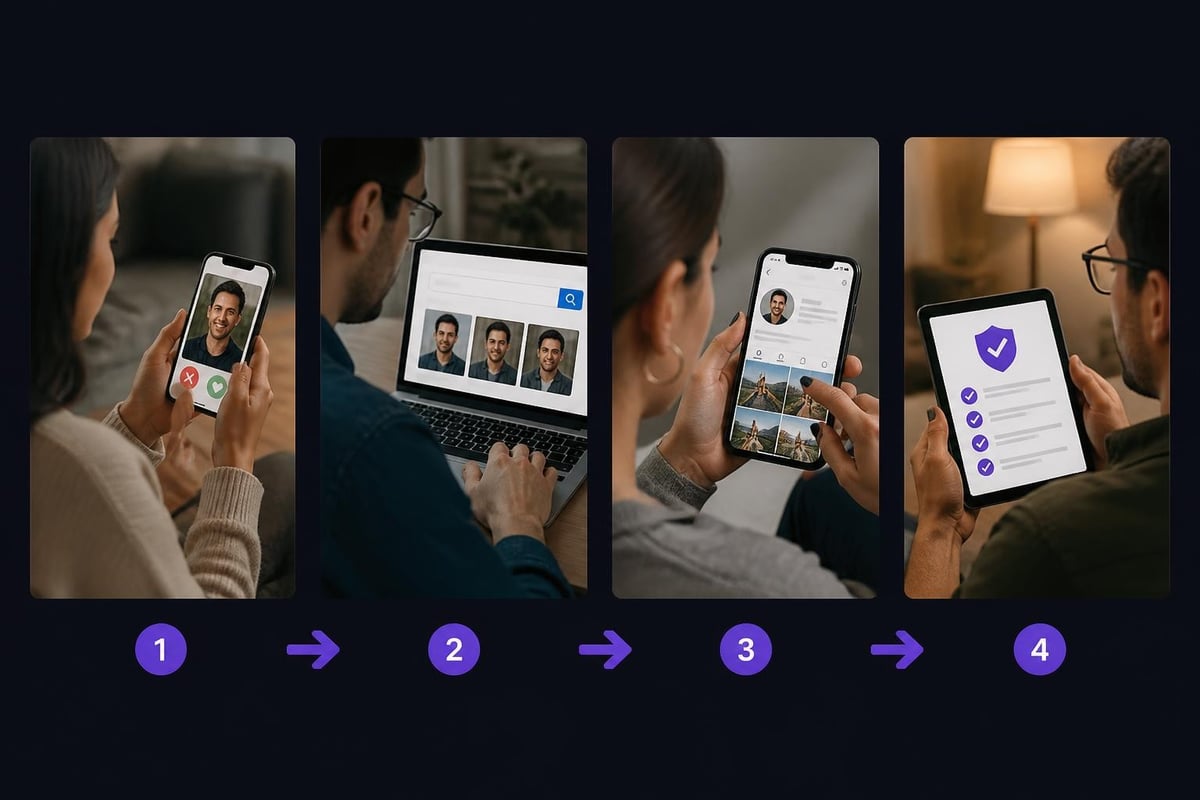
Now that you know what to look for, let's talk about how to actually verify the person you're chatting with. These methods balance thoroughness with respect for privacy.
Reverse Image Search
This is your first line of defense against fake profiles. Upload their profile photo to Google Images or TinEye to see where else it appears online.
What to do:
- Save their main profile photo to your device
- Go to Google Images and click the camera icon
- Upload the photo or paste the image URL
- Review the results for duplicates on other sites
If their photo appears on multiple dating sites under different names, or belongs to an Instagram influencer from another country, you've caught a catfish. Simple as that.
Social Media Cross-Referencing
Most Australians have some kind of social media presence. If someone claims to have zero online footprint in 2026, that's unusual enough to warrant a closer look.
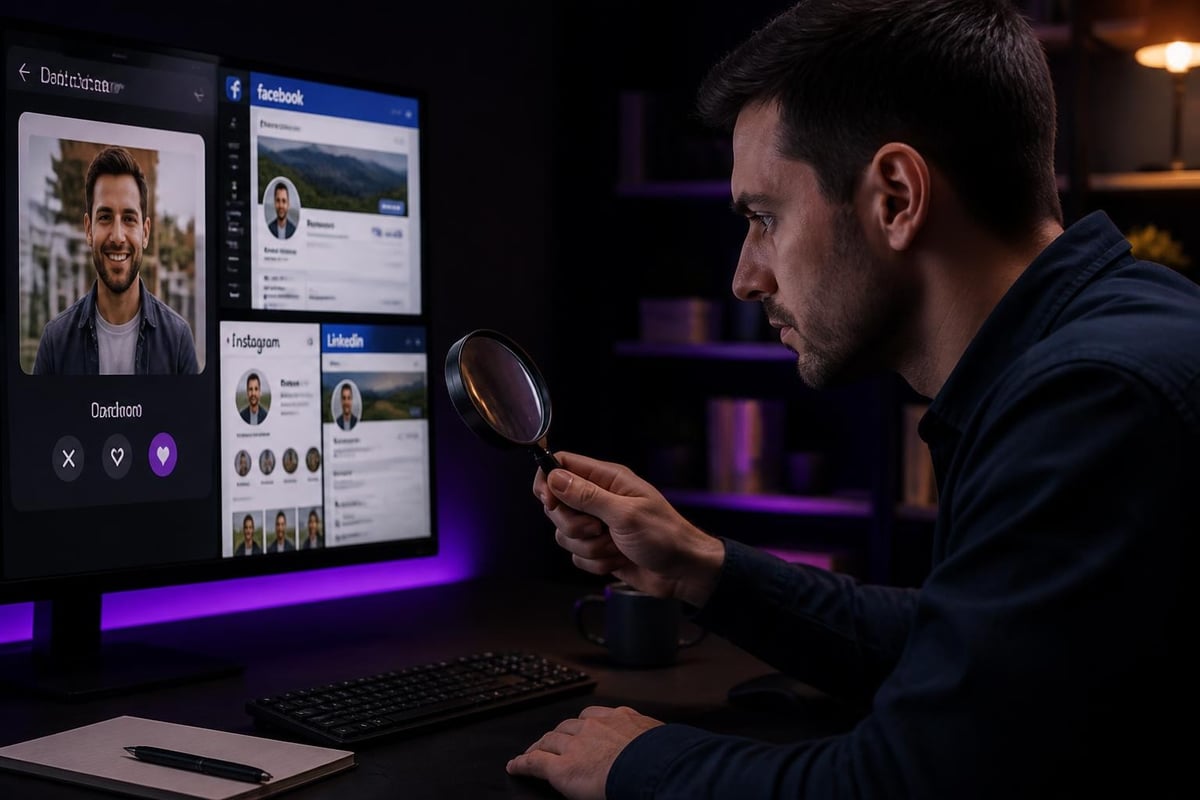
Search their name (and any other details they've shared) on Facebook, Instagram, and LinkedIn. Look for consistency in location, age, occupation, and interests. A real person's social media usually aligns with what they've told you on the dating app.
What authentic profiles typically show:
- Activity within the past few months
- Photos with friends and family (not just solo shots)
- Comments and interactions that feel natural
- Details that match their dating profile story
Web Search Checks and Public Records
Sometimes you need to go deeper than social media. A simple web search can reveal news articles, professional profiles, or public records that confirm someone's identity.
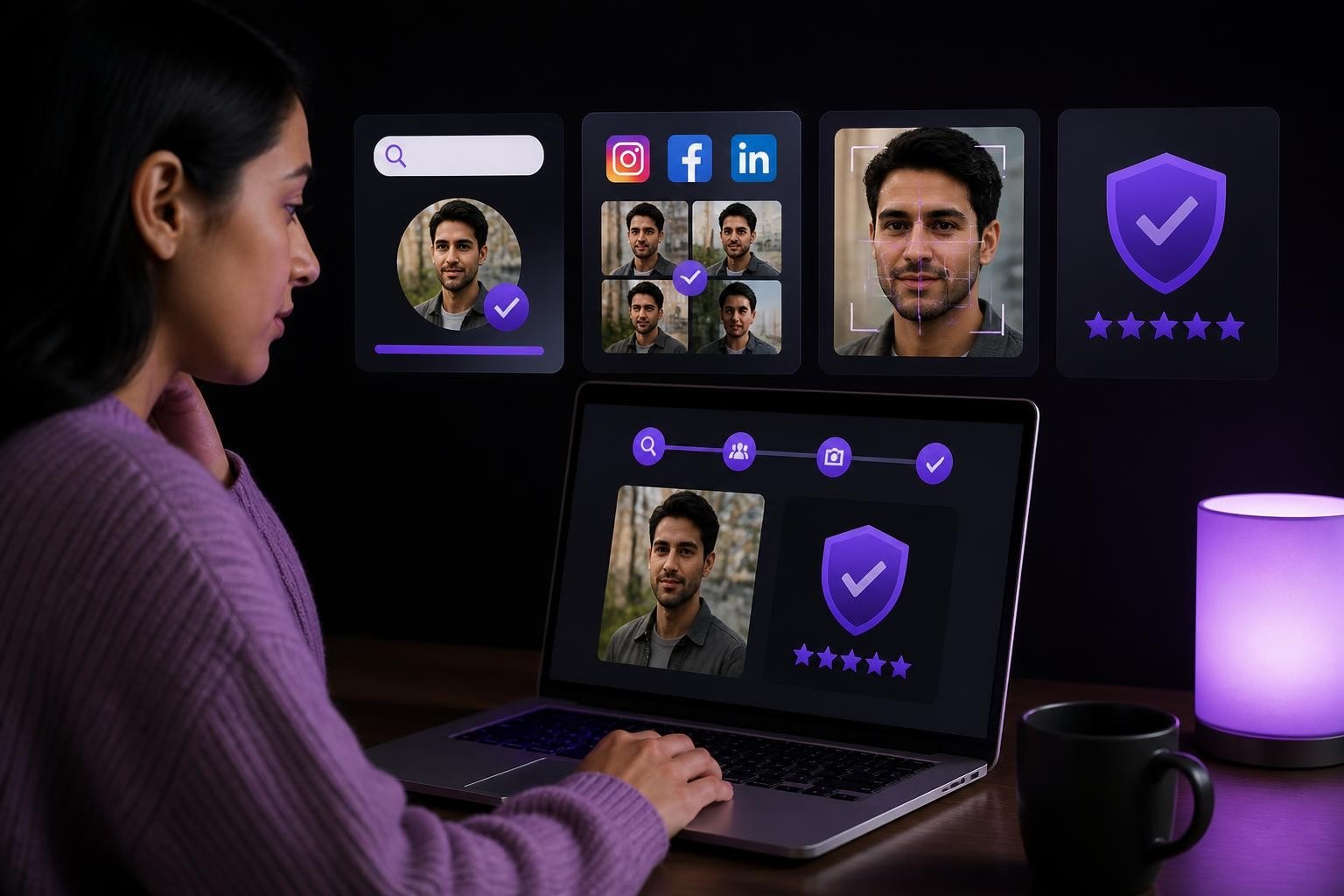
For Australian singles who want more comprehensive peace of mind, a web search check scans public records, social platforms, and news sources to deliver a clear safety rating before you meet. This approach saves time and provides structured information without crossing into stalker territory.
What a thorough web check covers:
- Public records and court documents
- News articles and media mentions
- Dating app presence across multiple platforms
- Photo verification across the web
- Clear safety rating based on findings
This method is particularly useful if someone's story seems inconsistent or if you've spotted other red flags worth investigating.
Common Red Flags That Show Up When You Check Dating Profiles
Even when profiles look legitimate at first glance, certain patterns emerge that signal trouble. Knowing these warning signs helps you make faster, smarter decisions.
Financial Red Flags
Romance scammers follow predictable scripts. They build trust quickly, then manufacture a crisis that requires your financial help.
Watch for these danger signs:
- Mentions money troubles early in conversations
- Claims to work overseas (oil rigs, military deployment, international business)
- Creates emergencies requiring urgent financial assistance
- Refuses to meet in person despite ongoing communication
- Asks you to receive or transfer money on their behalf
According to recent research, data-mining techniques can identify fraudulent dating profiles through linguistic patterns and behavioral cues. You don't need fancy algorithms, though. Trust your gut when money enters the equation too soon.
Behavioral Warning Signs
How someone communicates tells you a lot about their intentions. Scammers and dangerous individuals often display controlling or manipulative behavior patterns.
| Concerning Behavior | Why It Matters |
|---|---|
| Love bombing (excessive compliments immediately) | Creates artificial intimacy and dependency |
| Isolating you from friends/family | Control tactic to prevent outside perspective |
| Inconsistent availability | May be juggling multiple targets |
| Pressures for personal info or intimate photos | Potential blackmail or identity theft setup |
| Gets angry when you ask basic questions | Defensive because they're hiding something |
When you check dating profiles and the subsequent conversations, these patterns become clearer. Document anything that feels off.
Privacy and Ethics When You Check Dating Profiles
There's a line between due diligence and invasive stalking. Staying on the right side of that line matters, both legally and ethically.
What's Fair Game
You have every right to verify information someone has voluntarily shared with you. Checking public profiles, searching their name, and confirming basic facts they've told you isn't stalking, it's sensible.
Appropriate verification includes:
- Viewing public social media accounts
- Searching names and details they've provided
- Reverse image searching photos they've posted
- Checking professional credentials they've mentioned
- Reading publicly available news or records
These activities use information already in the public domain. You're simply confirming the story matches reality.